

Causes of Mold Growth
Like many other living organisms, mold fungi require atmospheric oxygen, water for sustenance and metabolism, nutrients, and the ability to reproduce. Mold spores are constantly present in the air, making their complete elimination nearly impossible. The higher the concentration of mold spores in the air, the greater the likelihood that they will settle in an environment conducive to growth. Mold is omnivorous and can feed on both organic and inorganic materials, including stone, clay, sand, and even diesel fuel. This means it will always find something to “feed on” in your home.
To permanently eliminate mold, it is necessary to address the combination of factors that allowed it to develop in the first place. The only crucial factor we can control is the presence of water. Water enters indoor spaces due to leaks in plumbing, heating, or air conditioning systems. It can seep in from the ground or rise through walls via capillary action. Rainwater may infiltrate the building, while in bathrooms, water can accumulate on horizontal surfaces and be absorbed by hydrophilic materials.
If mold repeatedly appears in the same spot, identify why the surface remains damp and eliminate the source of moisture. Otherwise, you will have to keep removing mold continuously, and with each recurrence, the affected materials will deteriorate further.
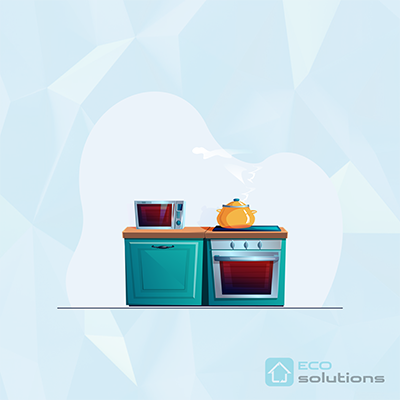
Fig. 1: The absence of a kitchen exhaust hood is a common cause of mold growth.

Fig. 2: Without forced ventilation, mold in the bathroom is only a matter of time.
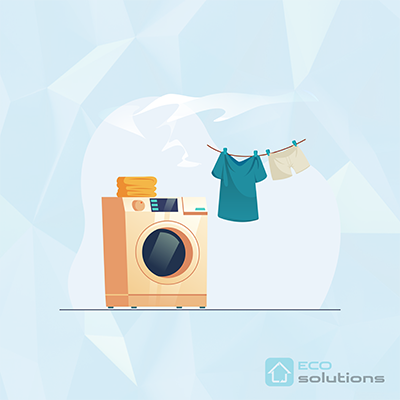
Fig. 3: Drying clothes indoors can contribute to mold growth.
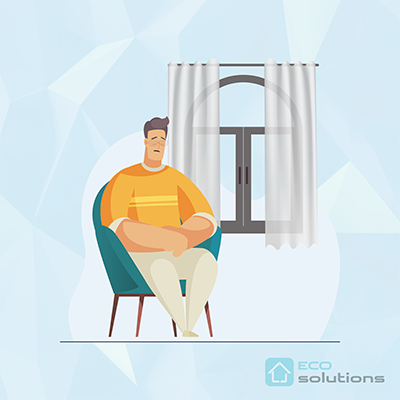
Fig. 4: Human breathing also increases indoor humidity levels.
Common Causes of Mold Growth
In 95% of cases, the source of moisture is condensation caused by high indoor humidity. If you are dealing with a mold problem, we strongly recommend developing a habit of monitoring humidity levels. If your windows accumulate condensation during cold periods, it is a clear sign that indoor humidity is too high.
Through our interactions with clients, we have noticed that some struggle with humidity measurements due to a lack of understanding of the results. A hygrometer reading of 40% or 80% relative humidity means little unless the air temperature at the time of measurement is considered.
To simplify indoor humidity measurement, we have created a dew point calculator that determines the optimal humidity level for a healthy living environment while ensuring that mold does not develop.
If mold growth results from high humidity, then high humidity itself is caused by an imbalance between the amount of water vapor generated indoors and the amount that is effectively removed. Water vapor enters the home during activities such as showering, cooking, laundry, and even breathing. To prevent humidity levels from rising, all moisture entering the space must be efficiently removed through forced ventilation with adequate capacity.
The simplest way to reduce humidity is to open windows for ventilation. The colder it is outside, the more significantly indoor humidity levels will drop.
Mechanism of Mold Growth
If there is no ventilation, moisture from the bathroom spreads into other rooms, mixing with steam generated from cooking, laundry, drying clothes, and even human breathing. As humidity levels rise, water vapor begins to condense on cooler surfaces, typically windows, wall corners, and slopes. This condensation causes surfaces to become damp, creating the perfect conditions for mold spores to settle and grow. If humidity continues to increase, condensation can occur on any objects, leading to mold formation even on upholstered furniture, shoes, and clothing inside wardrobes.
This is why bathrooms, shower rooms, and kitchens must have duct fans installed, with airflow capacity appropriate for the size and purpose of each space.
We strongly recommend taking showers, doing laundry, and cooking only with the ventilation turned on.
On our website, we have provided an exhaust fan calculator that allows you to check the performance of your existing ventilation system. If you don’t have one or if its capacity is insufficient, you can use it to select a suitable replacement.
If there is no centralized ventilation system in your home, you can set up an individual system by installing an air recuperator or air ventilator on an exterior wall. In some cases, a stationary household dehumidifier can be a solution, though proper ventilation remains the preferred method for controlling humidity.
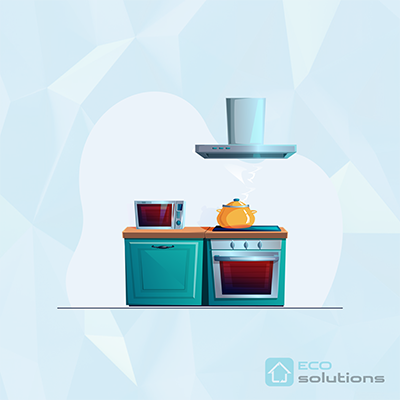
Fig. 5: Install the kitchen range hood at the appropriate height (electric/gas).

Fig. 6: Install an exhaust fan with a delay-off timer in the bathroom.
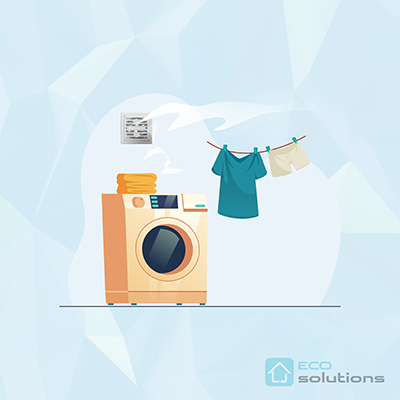
Fig. 7: Dry clothes with the ventilation on or windows open.
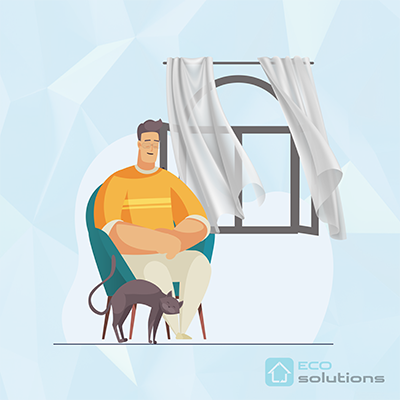
Fig. 8: Ventilation is a simple way to reduce indoor humidity.
What Is Relative Humidity?
Relative humidity indicates the percentage of moisture in the air at a given temperature. 50% means the air holds half of the maximum possible moisture, 0% means completely dry air, and 100% means fully saturated air.
Simple Analogy for Relative Humidity
- A glass of cold tea can dissolve 2 teaspoons of sugar, while a glass of hot tea can dissolve 4 teaspoons.
- If you add 1 teaspoon of sugar to cold tea, it reaches 50% saturation; adding 2 teaspoons to hot tea results in the same 50% saturation.
- Tea with 1 teaspoon (~7g) and tea with 2 teaspoons (~14g) have the same 50% saturation, but at different temperatures.
- If you add 2 teaspoons of sugar to cold tea (100% saturation) and then heat it, the saturation level drops to 50%, even though the total amount of dissolved sugar remains unchanged.
Ideal Indoor Humidity and Temperature
For a person at rest, the comfortable indoor temperature is 18–20°C, providing a pleasant and stable environment. For individuals engaged in physical activity, the ideal temperature depends on the level of exertion, typically ranging from 15–18°C to prevent overheating and discomfort.
The optimal relative humidity indoors is 50–60%, ensuring a balance between air moisture and comfort. The recommended range of 40–70% helps maintain indoor air quality and prevents potential issues related to excessive dryness or humidity.
High humidity promotes the growth of harmful bacteria, encourages mold formation, leads to condensation buildup on surfaces, and increases the thermal conductivity of building materials, which can contribute to heat loss and structural deterioration over time. [1, p. 5]
[1] Neufert P., Neff L. Design and Construction. Home, Apartment, Garden: Translated from German – 3rd ed., rev. and exp. – M.: Architecture-S, 2016. – 264 p.: ill.

If the outdoor temperature is 0°C, the air is very humid, puddles are visible on the asphalt, and it’s raining, the relative humidity of the air is 100%. However, when this air enters a home and warms up to 21°C, its humidity level drops to just 28%.
Ventilation is an effective way to reduce indoor relative humidity, even in damp and cold weather, helping to prevent mold growth.
We hope this article has been helpful to you and would greatly appreciate it if you share it using the QR code or link.